
Why 97% of Jewelry Website Visitors Leave Without Contacting You (And How to Fix It)
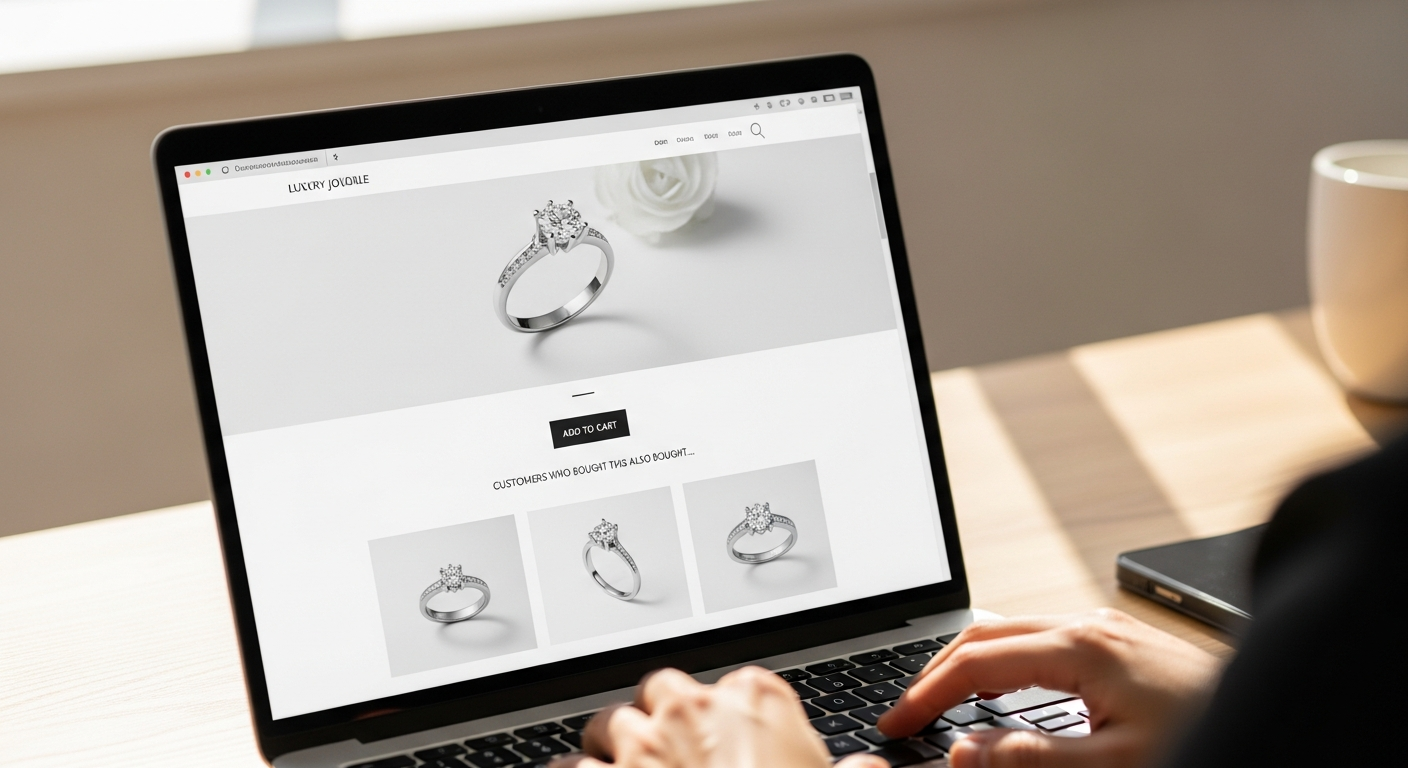
Why 97% of Jewelry Website Visitors Leave Without Contacting You
(And How to Fix It)
Category: Jeweler Marketing & Lead Generation
Reading Time: 8 minutes
Best For: Boutique & independent jewelers with custom bridal focus
You spent real money on your website. Maybe a designer laid it out beautifully. Your work is photographed perfectly. Your bio explains your process with care. And then — nothing. Someone visits, pokes around for 47 seconds, and leaves. Forever.
This is not a you problem. It's a structural problem with how most jewelry websites are built — and it's costing independent jewelers thousands of dollars in lost revenue every single month.
Let's talk about why it happens, what your visitors are actually looking for, and what you can do to finally turn that traffic into real consultations.
The 97% Problem: What the Numbers Actually Mean
Industry data consistently shows that 97% of website visitors leave without taking any action — no contact form, no phone call, no email. For most jewelers, that number hits even harder because the people visiting a custom jewelry website are not casual browsers. They're engaged couples. They're actively planning one of the biggest purchases of their lives.
And they're still leaving.
97% of jewelry website visitors leave without contacting you.
What makes this particularly painful is the secondary stat: 80% of those visitors never come back. This isn't just a lost click. It's a lost relationship — a couple that probably went to a competitor, or defaulted to a big-box retailer, simply because they didn't take action in the moment.
💡 Think About This: If your website gets 500 visitors a month, you're losing 485 of them. Even converting just 5% more of that traffic would mean 25 additional qualified leads every single month — without spending a dollar more on advertising.
Why They Leave: The Real Reasons
Here's the uncomfortable truth: most jewelry websites fail to capture leads not because of bad design or poor photography — but because they ask visitors to make a huge commitment before they're ready.
Think about what a typical jewelry website asks someone to do:
- Fill out a contact form with their name, email, and a message explaining what they want
- Book a consultation call with a stranger
- Walk into a physical store for a meeting
For a couple in the early stages of ring shopping, that's a lot. They don't know you yet. They don't know if you can make what they're imagining. They haven't even seen a price range. Asking them to commit to a conversation before any of that is answered creates friction — and friction kills conversions.
The Pinterest Board Problem
Here's what's actually going on in a couple's head when they land on your website: they have a vague vision. Maybe she's saved 47 photos to a Pinterest board. Maybe he has a rough idea of the budget. Neither of them can articulate exactly what they want, and that makes reaching out feel intimidating.
Sending an email that says "We want a custom ring" and waiting to hear back? That feels like a big, open-ended commitment to a process they don't fully understand.
So they don't send it. They keep browsing. They leave.
They're Doing Research, Not Making Decisions
Couples typically visit 7–10 jewelry websites before contacting anyone. At the research stage, they want information, inspiration, and some sense of what's possible — not a salesperson. Your contact form positions you as a salesperson. What they need from you at this stage is a guide.
What Visitors Actually Want From Your Website
When researchers study online buyer behavior, one pattern shows up consistently: people convert when they feel understood and when they can see themselves in the outcome.
For custom jewelry, that means two things:
- They want to visualize what their ring could look like — not just see your past work, but imagine their own
- They want to feel like the process is manageable — not overwhelming or intimidating
A static portfolio of past work doesn't accomplish either. It shows what you've done for other people — not what you'd do for them. And a blank contact form makes the process feel completely undefined.
The visitors who do convert tend to be the ones who already have a strong vision, feel financially confident, and are ready to commit. That's a small subset. The rest — the ones in the research phase, the ones who aren't sure yet, the ones who need a little help getting from vague idea to specific design — leave empty-handed.
Those are the leads you're losing. And they represent the vast majority of your traffic.
The Fix: Reduce Commitment, Increase Engagement
The solution isn't to chase down website visitors with popups or retargeting ads (though those can help). The real fix is to change what you're asking them to do — and to make that first interaction feel low-stakes and high-value.
Instead of asking a couple to "contact you," ask them to do something they actually want to do: design their ring.
The Interactive Design Experience
An interactive design quiz — one that walks a couple through their preferences step by step — accomplishes something a contact form never could. It turns a passive browsing experience into an active, personalized one. It answers the question they're silently asking: "Can you make what I'm imagining?"
When a visitor completes a design questionnaire and sees an AI-generated visualization of their ring concept, three things happen:
- They become invested. They've built something. It's theirs. The psychological shift from "shopping" to "owning" begins.
- They feel understood. The experience shows them that a custom ring isn't complicated — it's a guided process.
- They're ready to talk. By the time they request a consultation, they're not a cold lead. They're a warm prospect with a specific vision.
This is the difference between a 3% conversion rate and something meaningfully higher. When the barrier to engagement drops — when you're not asking for a commitment upfront — more people take the first step. And once they've taken that step, booking a consultation feels like the natural next move, not a leap of faith.
What You Receive on the Other End
Here's the other half of the equation: when a customer completes a design experience and submits for a consultation, you don't receive a vague inquiry. You receive a qualified lead packet — their stone preference, setting style, metal choice, carat range, budget, timeline, and contact details.
That's not a cold conversation. That's a consultation that can be productive from minute one, because both sides come in with clarity.
💡 The Consultation Problem It Solves: Most jewelers describe wasted consultations with couples who arrive with Pinterest boards and leave without buying — not because they weren't interested, but because the vision was too vague to move forward. Pre-qualified design leads eliminate that. The couple has already worked through their preferences. You already know if they're a fit.
What This Looks Like in Practice
Let's walk through two scenarios.
Scenario A: The Traditional Jewelry Website
A couple lands on your homepage. They browse your gallery. They read your About page. They look at the contact form, feel uncertain about what to say, and close the tab. Two weeks later, they're wearing a ring from a competitor.
You never knew they were there.
Scenario B: The Interactive Experience
A couple lands on your homepage and sees a button: "Design Your Ring." They click it. Over the next few minutes, they select a stone type, a shape, a setting style, a metal, a band design. They see an AI-generated rendering of what their ring could look like. It's not perfect — it's a starting point — but it's their starting point.
At the end, they submit their design and request a consultation. When they show up, they've already done 80% of the work. You know exactly what they want and roughly what they can spend. Your consultation is productive. Your close rate goes up.
And in your dashboard, you already have their name, email, phone number, preferences, and budget — before the first call.
Making the Math Work for Your Business
Let's put some numbers to this. Say your website gets 300 visitors per month.
With a traditional contact form:
| Metric | Result |
|---|---|
| Contact rate | 3% = 9 leads/month |
| Consultation-to-sale rate | 50% = ~4–5 sales/month |
| At $4,200 average order value | ~$19,000/month |
With an interactive design experience:
| Metric | Result |
|---|---|
| Quiz completion rate | 10–15% = 30–45 leads/month |
| Consultation-to-sale rate | 60%+ = 18–27 sales/month |
| At $4,200 average order value | $75,000–$113,000/month |
The traffic is identical. The advertising spend is identical. The only thing that changed is what you asked your visitors to do when they arrived.
3x to 5x more qualified leads from the same website traffic.
Practical Steps to Start Converting More Visitors
You don't have to rebuild your entire website to start seeing different results. Here's what to focus on:
1. Audit Your Current Call-to-Action
What are you asking visitors to do right now? If the primary CTA on your homepage is "Contact Us" or "Book a Consultation," you're leading with the highest-friction ask possible. Consider what a lower-commitment first step could look like for your visitors.
2. Add a Design Entry Point to Your Homepage
Whether it's a quiz, a design tool, or even a guided questionnaire, the goal is to give visitors something to do that doesn't require them to be ready to buy. The entry point should be prominent — not buried in a menu.
3. Capture Preference Data Before the Conversation
The more you know before a consultation, the more valuable that consultation becomes — for you and for the client. Look for ways to systematically collect design preferences, budget ranges, and timelines before the first call.
4. Follow Up Immediately
When a lead comes in through any channel, response time matters. Couples who submit a design inquiry are in an active decision-making moment. A response within an hour is dramatically more effective than one that comes the next day.
5. Track What's Working
If you don't know how many visitors your website gets, where they come from, or how many of them contact you, you're flying blind. Basic analytics — Google Analytics is free — will show you where the drop-off is happening so you can fix the right problem.
The Bottom Line
The 97% problem isn't going away on its own. As long as you're asking couples to make a high-commitment first move — fill out a form, book a call, walk into a store — most of them won't. Not because they don't want a custom ring. Not because they wouldn't choose you. But because the timing isn't right and the barrier is too high.
The fix is to give them something to do that feels low-stakes but delivers high value: a guided design experience that takes their vague vision and turns it into something concrete. When visitors become invested — when they've designed something that feels like theirs — conversion stops being a gamble and starts being inevitable.
The couples are already visiting your website. They're already looking for what you make. The question is whether you give them a reason to stay.
RingBuilder.ai is built by jewelers, for jewelers. Our AI-powered design quiz helps boutique and independent jewelry studios convert website visitors into qualified custom ring buyers — with full design specifications, budget, and contact details delivered before the first consultation.